
Sea Freight from China to Sao Paulo
China → Sao Paulo · via GRU air / Santos sea · clearance by Receita Federal do Brasil
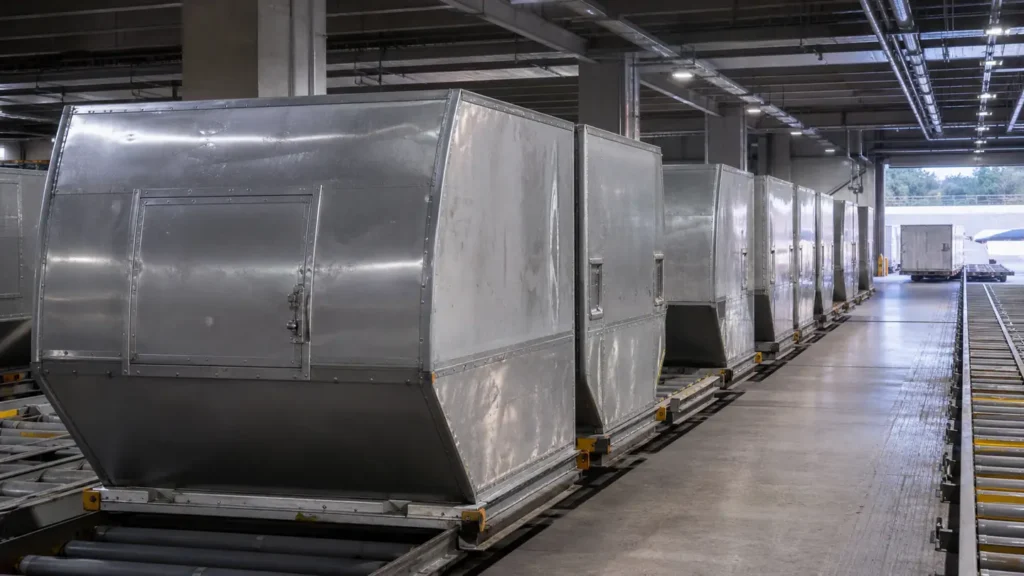
Sao Paulo is the largest market in South America, and it is served through GRU air / Santos sea. That combination is what actually sets your delivery date on this lane — allow +1 day for the inland leg on top of clearance.
Clearance itself is handled by Receita Federal do Brasil, and typical dwell at the gateway runs 7–15 days.
Import duty and tax position for Sao Paulo
Receita Federal do Brasil assesses duty and tax on cargo arriving for Sao Paulo consignees. Current regime: Import duty 10–35% plus IPI, PIS/COFINS and state ICMS — the compounded effective rate frequently exceeds 60%, with a de-minimis position of USD 50 for consignments between individuals only.
Conformity is the part most first-time importers underestimate: ANATEL homologation for telecom and radio devices; INMETRO certification for a wide range of consumer goods. Getting this wrong is expensive because it usually cannot be fixed after the cargo has landed.
Restrictions and known friction points for Brazil: ANATEL homologation is mandatory for anything that transmits, and takes months to obtain — start before production. INMETRO certification covers many consumer categories. Import licensing applies to a substantial list of goods and must be granted before shipment.
Routing and transit on this lane
Brazil is the most complex tax jurisdiction in the Americas. Federal duty is only the starting point — IPI, PIS/COFINS and state-level ICMS compound on top, and ICMS differs by state, so the same goods cost different amounts landed in São Paulo and Manaus. The Manaus Free Trade Zone is a genuine alternative structure for electronics assembly inputs.
| Sea gateways used | Santos, Paranaguá, Itajaí |
|---|---|
| Sea transit, China to gateway | 30–40 calendar days |
| Gateway serving Sao Paulo | GRU air / Santos sea |
| Inland leg to Sao Paulo | +1 day from the gateway |
| Typical clearance / dwell | 7–15 days |
| Peak season to plan around | Sep–Nov |

What to sort out before the cargo leaves China
- Book earlier than the transit time suggests during Sep–Nov, when space on this lane tightens.
- Get the conformity paperwork moving early: ANATEL homologation for telecom and radio devices; INMETRO certification for a wide range of consumer goods.
- Compare gross weight against volumetric weight (L×W×H ÷ 6000) — the higher figure is what gets billed on air and express.
- Declare lithium batteries, magnets, liquids and powders up front — retro-declaring after booking usually means re-planning the whole shipment.
- Put the Sao Paulo delivery address, contact name and phone number on the invoice, not just the packing list.
- Plan around the China-side windows too: Chinese New Year and Golden Week both compress capacity on the Brazil lane.
Frequently asked questions
How long does shipping from China to Sao Paulo take?
China to the Brazil gateway is 30–40 calendar days. On top of that, allow 7–15 days of clearance with Receita Federal do Brasil and a +1 day inland leg to Sao Paulo.
What duty and tax will I pay importing into Sao Paulo?
Receita Federal do Brasil applies: Import duty 10–35% plus IPI, PIS/COFINS and state ICMS — the compounded effective rate frequently exceeds 60%. The de-minimis position is USD 50 for consignments between individuals only. Under a DDP arrangement these are pre-paid, so nothing is collected on arrival in Sao Paulo.
Which port or airport does cargo for Sao Paulo clear through?
Cargo for Sao Paulo is routed via GRU air / Santos sea. Sea gateways for Brazil are Santos, Paranaguá, Itajaí; air gateways are GRU (São Paulo), VCP (Campinas), GIG (Rio de Janeiro). We pick whichever gives the shortest total door time for your address.
What documents does Receita Federal do Brasil require?
A commercial invoice with HS codes, a packing list, the bill of lading or air waybill, a certificate of origin where it lowers duty, and any product certification (ANATEL homologation for telecom and radio devices; INMETRO certification for a wide range of consumer goods). We prepare and file these as part of the service.
When is the busiest time on the China–Brazil lane?
Space and rates tighten around Sep–Nov, plus the China-side windows of Chinese New Year in January or February and Golden Week in early October. Book one to two weeks earlier in those periods.
How is the chargeable weight calculated for Sao Paulo?
We compare actual gross weight against volumetric weight — length × width × height in centimeters divided by 6000 for air — and bill the greater of the two, rounded up to the next kilogram. Light, bulky cargo is almost always billed on volume.
Other delivery cities in Brazil
References & official sources
Duty rates, thresholds and conformity requirements for Brazil change by ministerial decision, sometimes mid-year. The figures on this page are buyer-planning references, not a customs ruling — confirm the current position for your own HS code with Receita Federal do Brasil or your broker before you ship.
- Receita Federal — Aduana
- ANATEL homologation
- INMETRO
- WTO — Tariff Profiles (applied MFN duty by country)
- IATA — Lithium battery shipping guidance (PI 965–970)
- World Bank — Logistics Performance Index
- ICC — Incoterms 2020 rules (DDP, DAP, FOB definitions)
- IPPC — ISPM 15 wood packaging standard
Page data last reviewed: 10 月 2026.
Shipping by industry
This page covers the route and clearance picture for the destination. Packing, classification and the compliance step that actually holds a shipment depend on what you are sending — these guides cover that by commodity.
- Outdoor Products Toys, Sports, Outdoor & Leisure
- Fasteners Metal Products & Industrial Components
- Electric Motors General Machinery & Industrial Equipment
- Wire & Cable New Energy, Power & Electrical
- Wall Panels Building Materials & Construction Products
- Injection Molded Parts Plastics, Rubber & Packaging
- Furniture Furniture & Home Products
- Home Storage Products Furniture & Home Products
- Exhibition Display Equipment Retail, Display & Commercial Fixtures
- Aluminum Coils Steel & Metal Materials
- Pipe Fittings Metal Products & Industrial Components
- Generators New Energy, Power & Electrical
Checking the Brazil duty position yourself
Every duty and tax figure quoted on this page is our working estimate for planning, not a ruling. The binding rate for your consignment is whatever Receita Federal do Brasil applies against your declared HS code on the day of entry, and their published guidance is the source to check before you commit stock.
Most landed-cost surprises trace back to classification rather than freight. the WCO Harmonized System defines the heading structure every customs administration builds on, and ITC Market Access Map will show you the duty a given heading attracts in this destination.
For ocean cargo, restricted commodities move under the IMO's IMDG Code, and the container has to be declared and stowed accordingly. Batteries, flammables and corrosives all have a compliant ocean path; what causes rolled bookings is finding out about them after the container is packed.
For a wider view of how importing into Brazil actually works — documentation norms, inspection behavior, the paperwork that tends to hold shipments — the U.S. ITA guide to Brazil customs regulations is a useful independent read alongside our own lane notes.
Watch: the process behind this route
This guide covers routing and clearance for Sao Paulo. The video below covers the wider shipping process that sits around it.
Ocean Freight 101 - What Is LCL Ocean Freight — Flexport. Published on YouTube by a third party; we link it because it explains the process well, not because we produced it or endorse the provider.
Customs clearance in Brazil
Duty and tax position, certification, typical port dwell and what actually holds shipments at this border — plus who files the entry.
Brazil clearance requirements →Priced routes to Brazil
- Yantian to Rio de Janeiro FCL Ocean Freight Rates | 20GP & 40HQ
- Ningbo to Itapoa FCL Ocean Freight Rates | 20GP & 40HQ
- Yantian to Santos FCL Ocean Freight Rates | 20GP & 40HQ
- Ningbo to Navegantes Container Shipping — 40HQ Rates
- Yantian–Navegantes Sea Freight: Container Rates and Schedule
- Ningbo to Suape FCL Ocean Freight Rates | 20GP & 40HQ