
Sea Freight from China to Basel
China → Basel · via BSL air / Basel Rhine port · clearance by Federal Office for Customs and Border Security (BAZG)
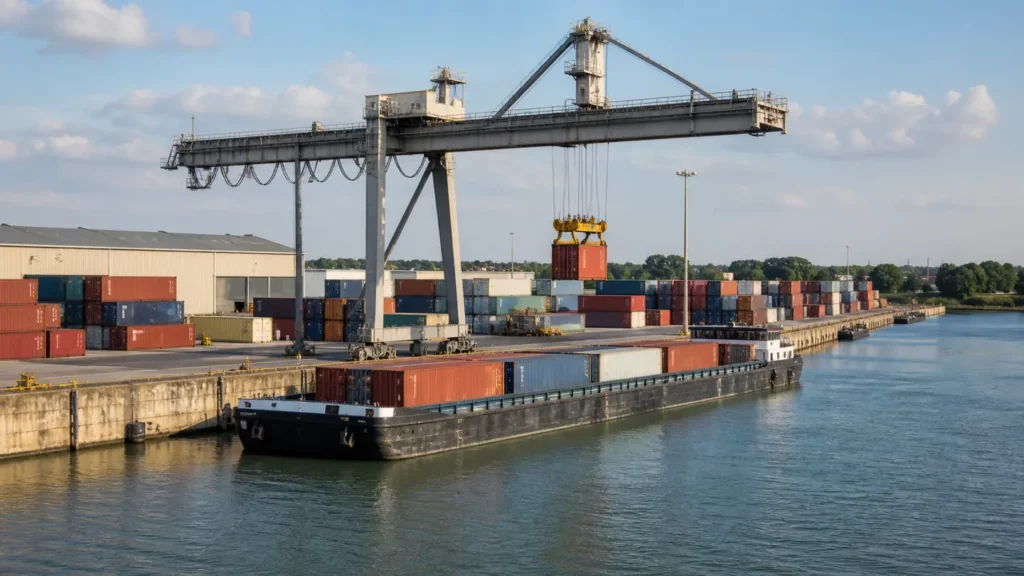
Freight from China into Basel clears through BSL air / Basel Rhine port. Basel is chemical and pharmaceutical center with river access, and the inland leg is same-day, so the clearance date is effectively the delivery date.
On the destination side, Federal Office for Customs and Border Security (BAZG) handles clearance; budget 2–5 days of dwell before the cargo is released.
Duty, tax and clearance into Basel
Imports into Switzerland are cleared by Federal Office for Customs and Border Security (BAZG). The headline position is: VAT 8.1%; customs duty is assessed on gross weight rather than value, which is unusual and changes how packaging affects cost. The de-minimis threshold is Duty and VAT waived when the total tax due is under CHF 5.
Conformity is the part most first-time importers underestimate: CE marking generally accepted; Swiss labeling rules for consumer products. Getting this wrong is expensive because it usually cannot be fixed after the cargo has landed.
Restrictions and known friction points for Switzerland: Weight-based duty means excess packaging is a direct cost. A separate Swiss clearance is required even for goods transiting the EU. Some agricultural and food products face high protective rates.
What the routing looks like in practice
Switzerland charges customs duty by gross weight, not customs value — so heavy packaging directly increases duty on low-value goods, and light high-value goods are treated generously. It is also outside the EU customs union, so cargo arriving through Rotterdam or Genoa clears a second time at the Swiss border. VAT at 8.1% is among the lowest in Europe.
| Sea gateways used | No seaport — via Rotterdam, Antwerp or Genoa, then rail or Rhine barge to Basel |
|---|---|
| Sea transit, China to gateway | 30–40 calendar days via a continental port |
| Gateway serving Basel | BSL air / Basel Rhine port |
| Inland leg to Basel | Same day from the gateway |
| Typical clearance / dwell | 2–5 days |
| Peak season to plan around | Sep–Nov |
What to sort out before the cargo leaves China
- Confirm the consignee in Basel can act as importer of record — Federal Office for Customs and Border Security (BAZG) will not release cargo to an unregistered party.
- Book earlier than the transit time suggests during Sep–Nov, when space on this lane tightens.
- Check the de-minimis position (Duty and VAT waived when the total tax due is under CHF 5) against your invoice value before you decide how to split the shipment.
- Ask for the HS code in writing from your supplier and verify the Switzerland duty rate against it yourself.
- Get the conformity paperwork moving early: CE marking generally accepted; Swiss labeling rules for consumer products.
- Use ISPM-15 treated pallets. Untreated wood is the most common reason otherwise-clean cargo gets held.
Frequently asked questions
How long does shipping from China to Basel take?
China to the Switzerland gateway is 30–40 calendar days via a continental port. On top of that, allow 2–5 days of clearance with Federal Office for Customs and Border Security (BAZG) and a same-day inland leg to Basel.
What duty and tax will I pay importing into Basel?
Federal Office for Customs and Border Security (BAZG) applies: VAT 8.1%; customs duty is assessed on gross weight rather than value, which is unusual and changes how packaging affects cost. The de-minimis position is Duty and VAT waived when the total tax due is under CHF 5. Under a DDP arrangement these are pre-paid, so nothing is collected on arrival in Basel.
Which port or airport does cargo for Basel clear through?
Cargo for Basel is routed via BSL air / Basel Rhine port. Sea gateways for Switzerland are No seaport — via Rotterdam, Antwerp or Genoa, then rail or Rhine barge to Basel; air gateways are ZRH (Zurich), GVA (Geneva), BSL (Basel). We pick whichever gives the shortest total door time for your address.
How is the chargeable weight calculated for Basel?
We compare actual gross weight against volumetric weight — length × width × height in centimeters divided by 6000 for air — and bill the greater of the two, rounded up to the next kilogram. Light, bulky cargo is almost always billed on volume.
What certification do I need for Switzerland?
For regulated goods, plan for: CE marking generally accepted; Swiss labeling rules for consumer products. Missing conformity paperwork is the single most common cause of a hold, and in most cases it cannot be remedied once the cargo has arrived.
Is sea freight cheaper than air freight into Basel?
Per kilo, yes — usually by a wide margin. The trade-off is time: 30–40 calendar days via a continental port by sea versus 4–6 business days by air to the Switzerland gateway, before clearance and the same-day inland leg. The crossover point is normally somewhere between 100 and 300 kg depending on the density of your cargo.
Other delivery cities in Switzerland
References & official sources
Duty rates, thresholds and conformity requirements for Switzerland change by ministerial decision, sometimes mid-year. The figures on this page are buyer-planning references, not a customs ruling — confirm the current position for your own HS code with Federal Office for Customs and Border Security (BAZG) or your broker before you ship.
- Federal Office for Customs and Border Security (BAZG)
- Tares tariff database
- WTO — Tariff Profiles (applied MFN duty by country)
- IPPC — ISPM 15 wood packaging standard
- WCO — Harmonized System nomenclature
- IMO — IMDG Code for dangerous goods by sea
Page data last reviewed: 10 月 2026.
Shipping by industry
This page covers the route and clearance picture for the destination. Packing, classification and the compliance step that actually holds a shipment depend on what you are sending — these guides cover that by commodity.
- Metal Fabrication Metal Products & Industrial Components
- Pressure Vessels Metal Products & Industrial Components
- Switchgear New Energy, Power & Electrical
- Doors & Windows Building Materials & Construction Products
- Corrugated Packaging Wood, Bamboo & Paper Products
- Glass Packaging Plastics, Rubber & Packaging
- Kitchenware Furniture & Home Products
- Home Textiles Textiles, Apparel, Footwear & Leather
- Inflatable Products Toys, Sports, Outdoor & Leisure
- Bolts Metal Products & Industrial Components
- Industrial Boilers General Machinery & Industrial Equipment
- Building Materials Building Materials & Construction Products
Checking the Switzerland duty position yourself
Duty and tax figures on this page are planning estimates. The binding assessment is made by Federal Office for Customs and Border Security (BAZG) against your declared HS code at the time of entry; where the amount is material, verify the current rate through ITC Market Access Map before committing to an order.
Classification drives everything downstream: the same carton can attract very different duty depending on the heading it lands in, and the structure those headings come from is the World Customs Organization Harmonized System. If your product sits near a boundary between two headings, resolve it before shipping rather than at the border.
For ocean cargo, restricted commodities move under the IMO's IMDG Code, and the container has to be declared and stowed accordingly. Batteries, flammables and corrosives all have a compliant ocean path; what causes rolled bookings is finding out about them after the container is packed.
Watch: the process behind this route
This guide covers routing and clearance for Basel. The video below covers the wider shipping process that sits around it.
FCL vs LCL Shipping: When to Switch (Break-Even Point Explained) — Max Antonov. Published on YouTube by a third party; we link it because it explains the process well, not because we produced it or endorse the provider.
Customs clearance in Switzerland
Duty and tax position, certification, typical port dwell and what actually holds shipments at this border — plus who files the entry.
Switzerland clearance requirements →