
Sea Freight from China to Sur
China → Sur · via MCT air / Sohar sea · clearance by Directorate General of Customs, Royal Oman Police
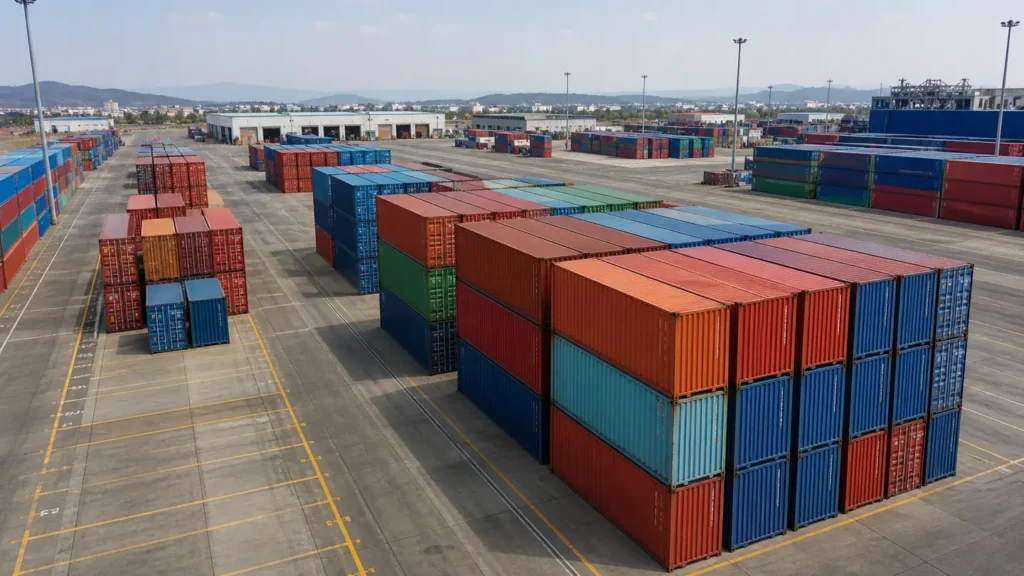
For buyers shipping into Sur, the practical question is not the ocean or flight time but what happens after arrival. Sur is eastern coastal town; cargo enters through MCT air / Sohar sea, and allow +1 day for the inland leg on top of clearance.
Clearance itself is handled by Directorate General of Customs, Royal Oman Police, and typical dwell at the gateway runs 2–5 days.
Import duty and tax position for Sur
Directorate General of Customs, Royal Oman Police assesses duty and tax on cargo arriving for Sur consignees. Current regime: VAT 5%; GCC common tariff of 5% on most goods, with a de-minimis position of OMR 100 for personal consignments.
Conformity is the part most first-time importers underestimate: Omani conformity certificate for regulated goods; Arabic labeling for consumer products. Getting this wrong is expensive because it usually cannot be fixed after the cargo has landed.
Restrictions and known friction points for Oman: Alcohol and pork are restricted to licensed importers. Arabic labeling is required. Some industrial goods need ministry approval tied to the project.
Routing and transit on this lane
Salalah sits directly on the main Asia–Europe trunk route, which makes it one of the faster Gulf destinations from South China, and Sohar serves the industrial north. Oman is also a practical alternative gateway when Jebel Ali is congested, with road onward delivery into the UAE.
| Sea gateways used | Sohar, Salalah, Duqm |
|---|---|
| Sea transit, China to gateway | 14–20 calendar days |
| Gateway serving Sur | MCT air / Sohar sea |
| Inland leg to Sur | +1 day from the gateway |
| Typical clearance / dwell | 2–5 days |
| Peak season to plan around | Sep–Nov |

What to sort out before the cargo leaves China
- Ask for the HS code in writing from your supplier and verify the Oman duty rate against it yourself.
- Get the conformity paperwork moving early: Omani conformity certificate for regulated goods; Arabic labeling for consumer products.
- Put the Sur delivery address, contact name and phone number on the invoice, not just the packing list.
- Use ISPM-15 treated pallets. Untreated wood is the most common reason otherwise-clean cargo gets held.
- Plan around the China-side windows too: Chinese New Year and Golden Week both compress capacity on the Oman lane.
- Declare lithium batteries, magnets, liquids and powders up front — retro-declaring after booking usually means re-planning the whole shipment.
Frequently asked questions
How long does shipping from China to Sur take?
China to the Oman gateway is 14–20 calendar days. On top of that, allow 2–5 days of clearance with Directorate General of Customs, Royal Oman Police and a +1 day inland leg to Sur.
What duty and tax will I pay importing into Sur?
Directorate General of Customs, Royal Oman Police applies: VAT 5%; GCC common tariff of 5% on most goods. The de-minimis position is OMR 100 for personal consignments. Under a DDP arrangement these are pre-paid, so nothing is collected on arrival in Sur.
Which port or airport does cargo for Sur clear through?
Cargo for Sur is routed via MCT air / Sohar sea. Sea gateways for Oman are Sohar, Salalah, Duqm; air gateways are MCT (Muscat), SLL (Salalah). We pick whichever gives the shortest total door time for your address.
What documents does Directorate General of Customs, Royal Oman Police require?
A commercial invoice with HS codes, a packing list, the bill of lading or air waybill, a certificate of origin where it lowers duty, and any product certification (Omani conformity certificate for regulated goods; Arabic labeling for consumer products). We prepare and file these as part of the service.
What certification do I need for Oman?
For regulated goods, plan for: Omani conformity certificate for regulated goods; Arabic labeling for consumer products. Missing conformity paperwork is the single most common cause of a hold, and in most cases it cannot be remedied once the cargo has arrived.
Can you deliver door-to-door in Sur?
Yes. Delivery to a Sur address is quoted as one figure covering freight, duty and tax owed to Directorate General of Customs, Royal Oman Police, and the +1 day inland leg. Confirm whether your consignee wants the goods at a warehouse, a marketplace fulfillment center or a shop front, because the last-mile requirement differs.
Other delivery cities in Oman
References & official sources
Duty rates, thresholds and conformity requirements for Oman change by ministerial decision, sometimes mid-year. The figures on this page are buyer-planning references, not a customs ruling — confirm the current position for your own HS code with Directorate General of Customs, Royal Oman Police or your broker before you ship.
- Oman Customs — Royal Oman Police
- WTO — Tariff Profiles (applied MFN duty by country)
- IPPC — ISPM 15 wood packaging standard
- WCO — Harmonized System nomenclature
- IMO — IMDG Code for dangerous goods by sea
Page data last reviewed: 10 月 2026.
Shipping by industry
This page covers the route and clearance picture for the destination. Packing, classification and the compliance step that actually holds a shipment depend on what you are sending — these guides cover that by commodity.
- Sanitary Ware Building Materials & Construction Products
- Cartons Wood, Bamboo & Paper Products
- Flexible Packaging Plastics, Rubber & Packaging
- Home Decor Furniture & Home Products
- Technical Textiles Textiles, Apparel, Footwear & Leather
- Outdoor Products Toys, Sports, Outdoor & Leisure
- Fasteners Metal Products & Industrial Components
- Electric Motors General Machinery & Industrial Equipment
- Wire & Cable New Energy, Power & Electrical
- Wall Panels Building Materials & Construction Products
- Injection Molded Parts Plastics, Rubber & Packaging
- Furniture Furniture & Home Products
Checking the Oman duty position yourself
Duty and tax figures on this page are planning estimates. The binding assessment is made by Directorate General of Customs, Royal Oman Police against your declared HS code at the time of entry; where the amount is material, verify the current rate through ITC Market Access Map before committing to an order.
Most landed-cost surprises trace back to classification rather than freight. the WCO Harmonized System defines the heading structure every customs administration builds on, and ITC Market Access Map will show you the duty a given heading attracts in this destination.
For ocean cargo, restricted commodities move under the IMO's IMDG Code, and the container has to be declared and stowed accordingly. Batteries, flammables and corrosives all have a compliant ocean path; what causes rolled bookings is finding out about them after the container is packed.
For a wider view of how importing into Oman actually works — documentation norms, inspection behavior, the paperwork that tends to hold shipments — the U.S. ITA guide to Oman customs regulations is a useful independent read alongside our own lane notes.
Watch: the process behind this route
This guide covers routing and clearance for Sur. The video below covers the wider shipping process that sits around it.
Sea Freight Shipping Process for Beginners: Complete Factory-to-Door Guide (Every Step Explained) — Vixnk - English. Published on YouTube by a third party; we link it because it explains the process well, not because we produced it or endorse the provider.
Customs clearance in Oman
Duty and tax position, certification, typical port dwell and what actually holds shipments at this border — plus who files the entry.
Oman clearance requirements →