
Air Freight from China to Sendai
China → Sendai · via SDJ air / Sendai sea · clearance by Japan Customs (税関)
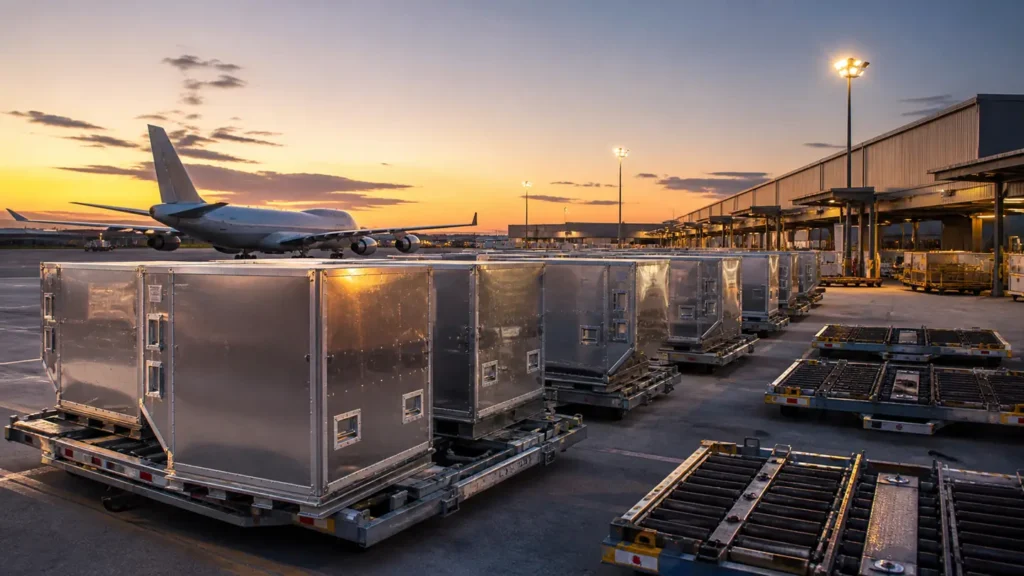
Freight from China into Sendai clears through SDJ air / Sendai sea. Sendai is Tohoku regional hub, and allow +1 day for the inland leg on top of clearance.
The clearing authority is Japan Customs (税関). Historical dwell on this gateway is around 1–3 days, and it lengthens in Sep–Nov.
Duty, tax and clearance into Sendai
Imports into Japan are cleared by Japan Customs (税関). The headline position is: Consumption tax 10%; duty 0–15% on most manufactured goods, higher on leather, footwear and food. The de-minimis threshold is JPY 10,000 customs value (some categories excluded).
Conformity is the part most first-time importers underestimate: PSE mark for electrical appliances; Giteki/MIC certification for radio devices; Food Sanitation Act notification for food-contact items. Getting this wrong is expensive because it usually cannot be fixed after the cargo has landed.
Restrictions and known friction points for Japan: Electrical products without a valid PSE mark cannot be imported. Radio devices need Giteki certification. Amazon FBA Japan requires an Importer of Record that is not Amazon, so confirm who the IOR will be before booking a DDP move.
Routing and transit on this lane
Japan is a fast, high-compliance lane: Shanghai and Qingdao to Tokyo or Osaka is 3–6 days by sea and often next-day by air. Clearance itself is quick, but the standards regime is unforgiving — PSE and Giteki marking must be correct before the goods ship, because there is no way to remediate at the border.
| Air gateways used | NRT (Narita), HND (Haneda), KIX (Osaka Kansai) |
|---|---|
| Air transit, China to gateway | 1–3 business days |
| Gateway serving Sendai | SDJ air / Sendai sea |
| Inland leg to Sendai | +1 day from the gateway |
| Typical clearance / dwell | 1–3 days |
| Peak season to plan around | Sep–Nov |
Before you book: Sendai checklist
- Get the conformity paperwork moving early: PSE mark for electrical appliances; Giteki/MIC certification for radio devices; Food Sanitation Act notification for food-contact items.
- Compare gross weight against volumetric weight (L×W×H ÷ 6000) — the higher figure is what gets billed on air and express.
- Confirm the consignee in Sendai can act as importer of record — Japan Customs (税関) will not release cargo to an unregistered party.
- Photograph carton markings and seal numbers before departure — it makes any claim far easier to settle.
- Declare lithium batteries, magnets, liquids and powders up front — retro-declaring after booking usually means re-planning the whole shipment.
- Ask for the HS code in writing from your supplier and verify the Japan duty rate against it yourself.
Frequently asked questions
How long does shipping from China to Sendai take?
China to the Japan gateway is 1–3 business days. On top of that, allow 1–3 days of clearance with Japan Customs (税関) and a +1 day inland leg to Sendai.
What duty and tax will I pay importing into Sendai?
Japan Customs (税関) applies: Consumption tax 10%; duty 0–15% on most manufactured goods, higher on leather, footwear and food. The de-minimis position is JPY 10,000 customs value (some categories excluded). Under a DDP arrangement these are pre-paid, so nothing is collected on arrival in Sendai.
Which port or airport does cargo for Sendai clear through?
Cargo for Sendai is routed via SDJ air / Sendai sea. Sea gateways for Japan are Tokyo, Yokohama, Osaka; air gateways are NRT (Narita), HND (Haneda), KIX (Osaka Kansai). We pick whichever gives the shortest total door time for your address.
When is the busiest time on the China–Japan lane?
Space and rates tighten around Sep–Nov, plus the China-side windows of Chinese New Year in January or February and Golden Week in early October. Book one to two weeks earlier in those periods.
What certification do I need for Japan?
For regulated goods, plan for: PSE mark for electrical appliances; Giteki/MIC certification for radio devices; Food Sanitation Act notification for food-contact items. Missing conformity paperwork is the single most common cause of a hold, and in most cases it cannot be remedied once the cargo has arrived.
Is sea freight cheaper than air freight into Sendai?
Per kilo, yes — usually by a wide margin. The trade-off is time: 3–6 calendar days by sea versus 1–3 business days by air to the Japan gateway, before clearance and the +1 day inland leg. The crossover point is normally somewhere between 100 and 300 kg depending on the density of your cargo.
Other delivery cities in Japan
References & official sources
Duty rates, thresholds and conformity requirements for Japan change by ministerial decision, sometimes mid-year. The figures on this page are buyer-planning references, not a customs ruling — confirm the current position for your own HS code with Japan Customs (税関) or your broker before you ship.
- Japan Customs
- METI — Electrical Appliance and Material Safety Act (PSE)
- MIC — radio equipment certification
- WTO — Tariff Profiles (applied MFN duty by country)
- IATA — Lithium battery shipping guidance (PI 965–970)
- World Bank — Logistics Performance Index
- ICC — Incoterms 2020 rules (DDP, DAP, FOB definitions)
- IPPC — ISPM 15 wood packaging standard
Page data last reviewed: 10 月 2026.
Shipping by industry
This page covers the route and clearance picture for the destination. Packing, classification and the compliance step that actually holds a shipment depend on what you are sending — these guides cover that by commodity.
- Sheet Metal Metal Products & Industrial Components
- Compressors General Machinery & Industrial Equipment
- Electrical Cabinets New Energy, Power & Electrical
- Flooring Building Materials & Construction Products
- Plastic Products Plastics, Rubber & Packaging
- Ceramic Tableware Glass & Ceramic Products
- Tableware Furniture & Home Products
- Display Stands Retail, Display & Commercial Fixtures
- Umbrellas Consumer Goods & Gifts
- Bearings Metal Products & Industrial Components
- Solar Panel New Energy, Power & Electrical
- Prefabricated Building Building Materials & Construction Products
Checking the Japan duty position yourself
Every duty and tax figure quoted on this page is our working estimate for planning, not a ruling. The binding rate for your consignment is whatever Japan Customs applies against your declared HS code on the day of entry, and their published guidance is the source to check before you commit stock.
Most landed-cost surprises trace back to classification rather than freight. the WCO Harmonized System defines the heading structure every customs administration builds on, and ITC Market Access Map will show you the duty a given heading attracts in this destination.
On the air side, anything with a cell or a battery in it, plus liquids, powders, magnets and aerosols, is governed by the IATA Dangerous Goods Regulations. Those articles are not refused outright, but they need to be declared at booking so the shipment is built correctly — declaring them late is the single most common cause of an air consignment being offloaded.
For a wider view of how importing into Japan actually works — documentation norms, inspection behavior, the paperwork that tends to hold shipments — the U.S. ITA guide to Japan customs regulations is a useful independent read alongside our own lane notes.
Watch: the process behind this route
This guide covers routing and clearance for Sendai. The video below covers the wider shipping process that sits around it.
Air freight and volumetric weight. What is dimensional, chargeable or volumetric weight? — Train Learn Grow. Published on YouTube by a third party; we link it because it explains the process well, not because we produced it or endorse the provider.
Customs clearance in Japan
Duty and tax position, certification, typical port dwell and what actually holds shipments at this border — plus who files the entry.
Japan clearance requirements →Priced routes to Japan
- Shekou to Hitachinaka FCL Ocean Freight Rates | 20GP & 40HQ
- Shipping a Container from Shekou to Tokyo: Cost & Transit
- Nansha to Moji FCL Ocean Freight Rates | 20GP & 40HQ
- Shekou to Moji FCL Ocean Freight Rates | 20GP & 40HQ
- Shipping a Container from Shekou to Yokohama: Cost & Transit
- Nansha to Osaka FCL Ocean Freight Rates | 20GP & 40HQ